Harris Teeter e-VIC Guide
Harris Teeter e-VIC Guide: Personalized Weekly Savings and Shopping Lists
Harris Teeter e-VIC is useful because it adds a personalized layer to ordinary weekly-ad shopping. Instead of requiring a shopper to scan every circular page, e-VIC can highlight products the customer regularly buys when they go on sale and can include e-VIC-only discounts. That makes it different from a public weekly ad, which is designed for a broader store audience.
Harris Teeter’s official e-VIC FAQ says members can view all advertised weekly specials from the e-VIC email, create a shopping list from the email, and receive special e-VIC-only savings that are automatically taken at the register. The same FAQ describes e-VIC as a way to notify customers when frequently purchased items are on sale.
This page explains how to use e-VIC as a planning tool while keeping the distinction clear between e-VIC, the standard weekly ad, VIC membership and digital coupons.
e-VIC vs the Weekly Ad
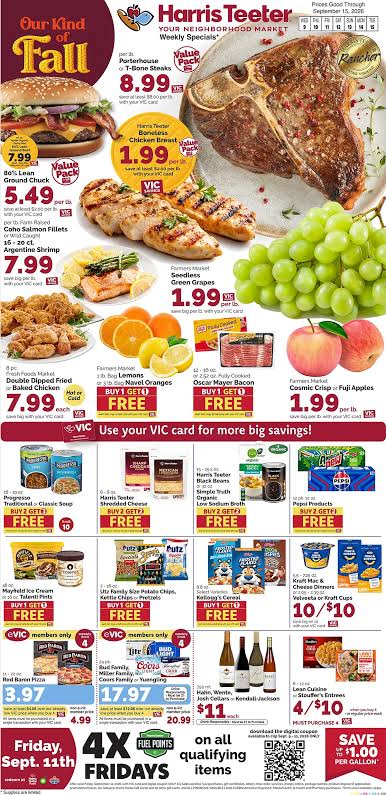
Readers who search for Harris Teeter e-VIC often need context around e-vic vs the weekly ad, not another copy of a circular image. The weekly ad and e-VIC overlap, but they are not identical. First, explain that the weekly ad presents store promotions to a broad audience. It is also important to note that e-VIC can highlight items based on the member’s shopping history or program eligibility. A second check is whether a deal site should not label a personalized e-VIC offer as universally available. Readers benefit from knowing that readers should sign in to their own account to confirm eligible offers. As a final verification step, the current Harris Teeter listing should be treated as the final reference when a price or condition could have changed. That distinction lets the evergreen explanation stay useful even after the featured products rotate out.
Feature | Weekly Ad | e-VIC |
Audience | Broad store audience | Member/account based |
Purpose | Show current promotions | Highlight relevant and member-only savings |
Personalized | Usually no | Can be |
Shopping list link | Available through site tools | Highlighted in e-VIC workflow |
e-VIC vs Digital Coupons
A strong explanation of e-vic vs digital coupons gives Harris Teeter e-VIC readers a way to judge the offer before they add it to a list. Both can save money, but they operate differently. It is also important to note that digital coupons are specific offers loaded to the Shopper’s Card. A second check is whether e-VIC can include automatically applied member-only discounts and personalized sale notifications. Readers benefit from knowing that a shopper should review both before finalizing the weekly list. The page should make clear that the receipt remains the best place to confirm what actually applied. For weekly planning, the page should point readers back to the active store-specific offer whenever availability or price is time-sensitive. Keeping those details visible reduces the chance that a reader mistakes a regional or expired offer for a universal price.
How to Use e-VIC for Weekly Planning
The practical value of how to use e-vic for weekly planning is that it connects the promotion to budget, timing, quantity, and store context. The most efficient workflow begins before the store trip. A second check is whether open the current e-VIC communication. Readers benefit from knowing that mark frequent purchases that are on sale. The page should make clear that compare those items with the public weekly ad. Another useful detail is that add needed products to the shopping list. For a real shopping trip, remember that check loaded digital coupons separately before checkout. When the page is refreshed for a new sales cycle, the date range and selected-store context should be confirmed before an example is described as a current deal. By separating the rule from the weekly example, the page remains easier to maintain and less likely to carry stale information.
Avoiding Personalized-Offer Confusion
On a well-maintained Harris Teeter e-VIC page, avoiding personalized-offer confusion should be written for someone making a real shopping decision. A personalized promotion should never be published as if every reader can receive it. Readers benefit from knowing that use language such as “eligible e-VIC members may see.” The page should make clear that do not publish screenshots containing private account information. Another useful detail is that separate public weekly prices from account-specific examples. For a real shopping trip, remember that encourage readers to check their own e-VIC message or account. To keep the guidance accurate, the shopper should verify the live terms if the decision depends on a precise price, coupon, or quantity threshold. For SEO and usability alike, that is stronger than padding the article with the same weekly-ad language on every URL.
Using e-VIC Without Overbuying
This part of the Harris Teeter e-VIC guide works best when using e-vic without overbuying is explained with enough detail to prevent a misleading shortcut. Personalization can make a promotion feel unusually relevant, but the same budgeting rules still apply. The page should make clear that buy items because they fit the household plan, not just because the offer is targeted. Another useful detail is that compare the final unit price. For a real shopping trip, remember that check storage and expiration. When examples are updated, confirm that keep optional e-VIC offers separate from must-buy groceries. When the promotion is turned into a shopping-list item, the site should distinguish its editorial explanation from Harris Teeter’s live, store-specific transaction information. The result is a page that supports a shopping decision instead of merely reproducing promotional material.
How to Keep This Page Accurate
Accuracy on harris teeter e vic depends on separating permanent guidance from weekly information. Keep the how-to material stable, but review price examples, sale periods, product availability language, and store-specific notes whenever the ad changes. Add a last-reviewed line near the top to make freshness obvious
- Confirm the selected-store or location context before publishing prices.
- Replace expired weekly dates and remove stale deal labels.
- Check official Harris Teeter help pages when describing rules or account features.
- Do not imply that every store carries every advertised product.
- Keep internal links pointing to the current evergreen deal and coupon pages.
Frequently Asked Questions
It is a member savings and communications program that can highlight weekly specials, frequently purchased products on sale and e-VIC-only discounts.
No. VIC is the membership/card program; e-VIC is a connected digital savings and communication feature.
The official FAQ says members can use the “View All Specials” link from the e-VIC email to see the advertised weekly specials.
e-VIC-only discounts described by Harris Teeter can be automatically taken at the register, while digital coupons are a separate load-to-card feature.
Not necessarily. e-VIC can be personalized, so shoppers should verify their own account offers.
Harris Teeter’s official FAQ says the e-VIC workflow can connect members to shopping-list creation.
Final Takeaway
e-VIC is most valuable when it helps a member focus on relevant savings without confusing personalized offers with public weekly-ad prices. Use the e-VIC message to identify frequently purchased items on sale, compare them with the current ad, add useful items to the shopping list and verify the final discount at checkout.
Additional Harris Teeter E-Vic Planning Note 1
Another way to strengthen this page is to show the reader how to verify a deal independently. That means checking the active date range, preferred store, product size, member requirement, coupon condition, and final receipt when appropriate. The sequence is simple, but it prevents many of the misunderstandings that occur when a headline price is separated from its conditions. For an independent website, transparent verification is also an important trust signal. For harris teeter e vic, that means the reader should finish with a usable decision rule rather than a vague impression that every highlighted offer is worth buying.
Additional Harris Teeter E-Vic Planning Note 2
Budget context adds depth to this topic. A promotion can be legitimate and still be a poor choice for a particular household if it requires excess quantity, creates waste, or replaces a cheaper alternative. Encourage readers to set a spending limit, rank essentials above optional deals, and use sale pricing to improve an existing plan. That turns the page into a shopping tool rather than a list of reasons to buy. The value for someone researching harris teeter e vic is practical: they can identify what needs verification, what can be planned in advance, and what should wait for the live ad.