Harris Teeter Weekly Ad FAQ
Harris Teeter Weekly Ad FAQ: Dates, Prices, VIC, BOGO and Coupons
A Harris Teeter weekly ad FAQ should answer the practical questions that appear after a shopper sees a promotion: when did this ad start, does the price apply at my store, do I need a VIC card, can I use a coupon, and what happens if the item is unavailable? Bringing these answers together reduces the need to search multiple pages during a shopping trip.
The answers below are written as an independent guide and are based on current Harris Teeter help and policy information where applicable. Because weekly promotions and policies can change, readers should verify live prices and official rules before checkout.
This page can also work as a hub that links to deeper guides for BOGO, digital coupons, e-VIC, coupon policy and weekly-ad scheduling.
Weekly Ad Dates and Store Selection
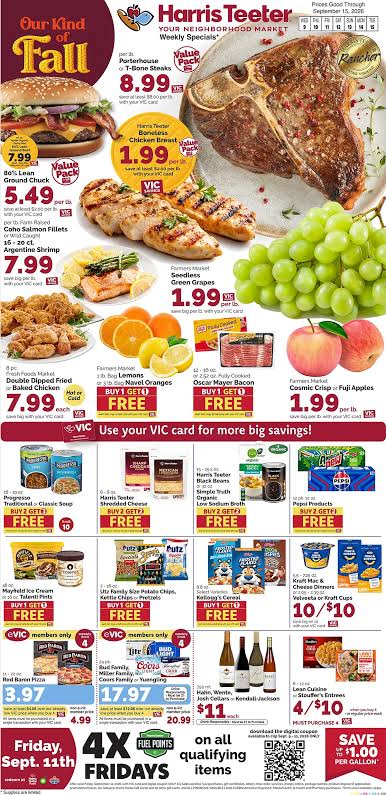
On a well-maintained Harris Teeter weekly ad FAQ page, weekly ad dates and store selection should be written for someone making a real shopping decision. Timing and location are the first two pieces of context for any weekly-ad question. When examples are updated, confirm that the standard ad update is Wednesday at midnight ET. First, explain that specified stores in Indiana, Illinois and Eastern Missouri update Thursday. It is also important to note that the online ad is connected to a preferred store. A second check is whether an old search result may show an expired promotion. To keep the guidance accurate, the live store page should be checked for the selected location, current dates, and exact product terms. This structure is especially helpful on mobile, where readers need the conditions summarized before they reach the checkout line.
VIC and e-VIC Questions
This part of the Harris Teeter weekly ad FAQ guide works best when vic and e-vic questions is explained with enough detail to prevent a misleading shortcut. Many shoppers use “VIC” and “e-VIC” interchangeably even though they are different parts of the savings system. First, explain that vIC is the membership/card layer. It is also important to note that e-VIC can provide weekly notifications, shopping-list access and member-only savings. A second check is whether some weekly-ad prices may depend on VIC use. Readers benefit from knowing that personalized e-VIC offers should not be assumed to apply to every shopper. When the promotion is turned into a shopping-list item, the reader should confirm the current price and eligibility in the Harris Teeter ad tied to the preferred store. The page can then be refreshed with new products without rewriting the underlying explanation from scratch.
Digital Coupon Questions
Instead of treating digital coupon questions as a label, the page should show how it changes the shopper’s next action. Digital coupons rely on the linked Shopper’s Card and exact product match. It is also important to note that load the offer before shopping. A second check is whether use the correct linked card or Alt ID. Readers benefit from knowing that check the coupon expiration date. The page should make clear that look for “ecpn” on the receipt to confirm redemption. Another useful detail is that digital manufacturer coupons do not stack with paper or internet manufacturer coupons on the same item under current policy. As a final verification step, the final decision should use the active offer for the shopper’s location rather than an undated screenshot or archived price. This approach also makes weekly updates easier because only the time-sensitive examples need to change.
BOGO Questions
The section on bogo questions is useful because the same promotion can look different once size, quantity, account eligibility, and timing are considered. BOGO is simple at the headline level but can involve quantity and coupon details. A second check is whether each BOGO item is treated as a separate purchase for coupon purposes. Readers benefit from knowing that online orders need the intended quantity entered. The page should make clear that unit-price comparison is still important. Another useful detail is that inventory can run out during popular promotions. For weekly planning, the product description, size, quantity rule, and member requirement should all be checked against the current store listing. It also gives the page a reason to exist beyond the flyer: the reader leaves with a repeatable method for evaluating value.
Out-of-Stock and Price Problems
For an independent Harris Teeter weekly ad FAQ resource, out-of-stock and price problems is an opportunity to add interpretation that the flyer itself may not provide. A weekly ad cannot guarantee that every item will still be available at every store. Readers benefit from knowing that check live inventory where available. The page should make clear that ask the store about substitutes or applicable rain-check rules. Another useful detail is that use the receipt and shelf tag when investigating a scan-price problem. For a real shopping trip, remember that refer to official customer service for account or transaction-specific issues. When the page is refreshed for a new sales cycle, the shopper should verify that the offer is still active and that the selected store is the one intended for the trip. That makes the content more dependable for readers who return every week instead of treating it as a one-time promotion page.
Publishing and Accuracy Questions
For shoppers researching Harris Teeter weekly ad FAQ, the section on publishing and accuracy questions should answer a concrete planning question rather than repeat a sales headline. Independent publishers have their own set of responsibilities. The page should make clear that use clear dates on weekly prices. Another useful detail is that do not copy proprietary flyer content as if it were original editorial work. For a real shopping trip, remember that summarize and interpret promotions in your own words. When examples are updated, confirm that add a disclaimer and link to official Harris Teeter resources for final verification. To keep the guidance accurate, the current Harris Teeter listing should be treated as the final reference when a price or condition could have changed. That distinction lets the evergreen explanation stay useful even after the featured products rotate out
How to Keep This Page Accurate
Because harris teeter weekly ad faq can change with each sales cycle, review the dated portions on a fixed schedule. Replace expired examples, confirm the selected-store context, and keep a visible last-reviewed date so readers can tell when the page was checked. Evergreen explanations can remain, but any policy-based statement should be revisited when Harris Teeter updates its official help pages.
- Confirm the selected-store or location context before publishing prices.
- Replace expired weekly dates and remove stale deal labels.
- Check official Harris Teeter help pages when describing rules or account features.
- Do not imply that every store carries every advertised product.
- Keep internal links pointing to the current evergreen deal and coupon pages.
Frequently Asked Questions
For most stores, the official help center says the new ad is available at midnight ET on Wednesday.
No. The online weekly ad is associated with a preferred store and regional differences can exist.
VIC is Harris Teeter’s shopper membership/card program used with member pricing and connected savings tools.
e-VIC is a digital member program that can highlight weekly specials, frequently purchased products on sale and e-VIC-only savings.
Load them to the linked Shopper’s Card, buy the qualifying item and use the same card or Alt ID at checkout.
Not on the same item under the current Harris Teeter coupon policy.
The current policy treats each BOGO item as a separate purchase, with one coupon allowed per purchased item subject to the other rules.
Availability is not guaranteed. Ask the store about alternatives or applicable rain-check rules.
The page may be outdated, tied to another store, or missing a card/quantity condition. Verify the live official offer.
No. Archived ads should be treated as historical information only.
Final Takeaway
A strong Harris Teeter weekly ad FAQ should solve common planning questions in one place while pointing readers to deeper pages when the answer depends on a specific program. Keep the page concise enough to scan, but update policy-related answers whenever Harris Teeter changes its official guidance.
Additional Harris Teeter Weekly Ad Faq Planning Note 1
Store-level differences deserve their own reminder because Harris Teeter’s online ad is tied to a preferred store. A current example should therefore carry enough context that a reader can tell where and when it applied. If the page discusses a past or preview price, label that status openly. Clear context is more useful than implying that every reader will see the same item, price, or inventory. Applied to harris teeter weekly ad faq, this keeps the page focused on accurate planning and gives returning readers a reason to use the guide again next week.
Additional Harris Teeter Weekly Ad Faq Planning Note 2
The article can also help readers avoid false urgency. Weekly promotions repeat, categories rotate, and not every highlighted item needs to be purchased immediately. A shopper who knows the normal household need, the typical unit price, and the storage limits can make a calmer decision. That is particularly valuable for BOGO, large-pack, fresh-food, and stock-up promotions, where a discount can easily be offset by waste. For a harris teeter weekly ad faq visitor, the final takeaway should be operational—what to compare, what to confirm, and when to ignore a promotion that does not fit the household.