Harris Teeter Shopping List
Harris Teeter Shopping List: Turn Weekly Deals Into a Practical Grocery Plan
A Harris Teeter shopping list is most useful when it combines what the household needs with the promotions that actually improve value. Starting with the weekly ad can help, but copying every sale item into a list often leads to a larger basket rather than a lower bill. The better approach is to begin with meals and essentials, then add only the weekly, VIC, e-VIC and digital-coupon offers that fit the plan.
Harris Teeter’s e-VIC help material says members can create a shopping list through the e-VIC workflow, which makes the official tools a useful place to organize account-based offers. An independent guide can complement that by giving readers a simple budgeting and prioritization method.
The template below is designed for repeat weekly use and can work whether the shopper prefers a phone note, printable page or spreadsheet.
Start With Meals and Essentials
For an independent Harris Teeter shopping list resource, start with meals and essentials is an opportunity to add interpretation that the flyer itself may not provide. The list should begin with need, not with advertising. Another useful detail is that write down meals or core food needs for the week. For a real shopping trip, remember that check pantry, freezer and household supplies before adding duplicates. When examples are updated, confirm that identify items that must be purchased even if they are not on sale. First, explain that use the ad only after the base list exists. When the page is refreshed for a new sales cycle, the page should point readers back to the active store-specific offer whenever availability or price is time-sensitive. Keeping those details visible reduces the chance that a reader mistakes a regional or expired offer for a universal price.
Add Weekly-Ad Deals That Match the Plan
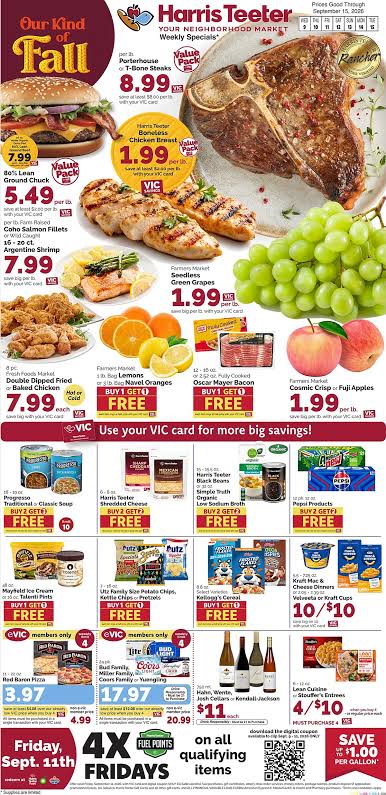
For shoppers researching Harris Teeter shopping list, the section on add weekly-ad deals that match the plan should answer a concrete planning question rather than repeat a sales headline. A promotion earns a place on the list when it replaces or improves a planned purchase. For a real shopping trip, remember that choose sale proteins that fit planned meals. When examples are updated, confirm that use produce specials to fill flexible side dishes or snacks. First, explain that add pantry deals only when the product is already useful to the household. It is also important to note that separate optional deals from essential items. To keep the guidance accurate, the date range and selected-store context should be confirmed before an example is described as a current deal. By separating the rule from the weekly example, the page remains easier to maintain and less likely to carry stale information.
Layer in VIC, e-VIC and Digital Coupons
Layer in VIC, e-VIC and Digital Coupons is where a Harris Teeter shopping list page can turn raw promotion information into something a household can actually use. Savings programs should be checked before quantities are finalized. When examples are updated, confirm that mark VIC prices beside relevant items. First, explain that review personalized e-VIC offers separately. It is also important to note that confirm which digital coupons are loaded to the card. A second check is whether do not assume paper and digital manufacturer coupons will stack on the same item. When the promotion is turned into a shopping-list item, the shopper should verify the live terms if the decision depends on a precise price, coupon, or quantity threshold. For SEO and usability alike, that is stronger than padding the article with the same weekly-ad language on every URL.
Organize by Store Department
Readers who search for Harris Teeter shopping list often need context around organize by store department, not another copy of a circular image. Department grouping can reduce backtracking and impulse browsing. First, explain that produce. It is also important to note that meat and seafood. A second check is whether dairy and refrigerated. Readers benefit from knowing that frozen. The page should make clear that pantry and beverages. Another useful detail is that household and personal care. As a final verification step, the site should distinguish its editorial explanation from Harris Teeter’s live, store-specific transaction information. The result is a page that supports a shopping decision instead of merely reproducing promotional material.
Column | Purpose |
Item | What you plan to buy |
Quantity | How much you actually need |
Expected price | Budget estimate |
Deal type | Weekly ad, VIC, BOGO, e-VIC or digital coupon |
Priority | Must buy or optional |
Set a Budget Before Checkout
A strong explanation of set a budget before checkout gives Harris Teeter shopping list readers a way to judge the offer before they add it to a list. A list becomes a budgeting tool when each item has a rough expected cost. It is also important to note that estimate must-buy items first. A second check is whether set a limit for optional stock-up deals. Readers benefit from knowing that leave room for price changes or substitutions. The page should make clear that remove low-priority items if the estimated total is already too high. For weekly planning, the live store page should be checked for the selected location, current dates, and exact product terms. This structure is especially helpful on mobile, where readers need the conditions summarized before they reach the checkout line.
Review the Receipt After the Trip
The practical value of review the receipt after the trip is that it connects the promotion to budget, timing, quantity, and store context. The receipt can improve the next week’s planning process. A second check is whether check whether expected discounts applied. Readers benefit from knowing that note products that were out of stock. The page should make clear that compare estimated and actual spend. Another useful detail is that use the result to improve the next shopping list rather than chasing every new promotion. When the page is refreshed for a new sales cycle, the reader should confirm the current price and eligibility in the Harris Teeter ad tied to the preferred store. The page can then be refreshed with new products without rewriting the underlying explanation from scratch.
How to Keep This Page Accurate
A page about harris teeter shopping list should have an editorial maintenance routine. Confirm the live ad cycle, remove stale promotional claims, test links to first-party resources, and flag any example price with a date. Revisit policy sections only when the underlying official program changes.
- Confirm the selected-store or location context before publishing prices.
- Replace expired weekly dates and remove stale deal labels.
- Check official Harris Teeter help pages when describing rules or account features.
- Do not imply that every store carries every advertised product.
- Keep internal links pointing to the current evergreen deal and coupon pages.
Frequently Asked Questions
Harris Teeter’s e-VIC materials describe a shopping-list creation workflow, and the site/app may provide additional list tools.
No. Add it only when the unit price is good and the household can use the quantity.
Mark the deal type beside each list item and review loaded coupons before checkout.
Grouping by store department is simple and reduces backtracking.
Create must-buy and optional sections, set a spending limit and avoid adding a sale item unless it solves a real need.
Final Takeaway
A useful Harris Teeter shopping list starts with household needs and uses promotions as a filter, not as the starting point. Plan meals, check what you already have, add only relevant weekly deals, label account-based offers and keep a budget beside the list. That method can turn the weekly ad into a practical planning tool rather than an invitation to buy more.
Additional Harris Teeter Shopping List Planning Note 1
Another way to strengthen this page is to show the reader how to verify a deal independently. That means checking the active date range, preferred store, product size, member requirement, coupon condition, and final receipt when appropriate. The sequence is simple, but it prevents many of the misunderstandings that occur when a headline price is separated from its conditions. For an independent website, transparent verification is also an important trust signal. For harris teeter shopping list, that means the reader should finish with a usable decision rule rather than a vague impression that every highlighted offer is worth buying.
Additional Harris Teeter Shopping List Planning Note 2
Budget context adds depth to this topic. A promotion can be legitimate and still be a poor choice for a particular household if it requires excess quantity, creates waste, or replaces a cheaper alternative. Encourage readers to set a spending limit, rank essentials above optional deals, and use sale pricing to improve an existing plan. That turns the page into a shopping tool rather than a list of reasons to buy. The value for someone researching harris teeter shopping list is practical: they can identify what needs verification, what can be planned in advance, and what should wait for the live ad.
Additional Harris Teeter Shopping List Planning Note 3
Store-level differences deserve their own reminder because Harris Teeter’s online ad is tied to a preferred store. A current example should therefore carry enough context that a reader can tell where and when it applied. If the page discusses a past or preview price, label that status openly. Clear context is more useful than implying that every reader will see the same item, price, or inventory. Applied to harris teeter shopping list, this keeps the page focused on accurate planning and gives returning readers a reason to use the guide again next week.